On September 9, 2026, Vietnam Maritime University (VMU) welcomed the Delegation from the Ministry of Land, Infrastructure, Transport and Tourism of Japan (MLIT) for an exchange of experience in maritime education and training, with a particular focus on the application of simulator-based training for seafarers.
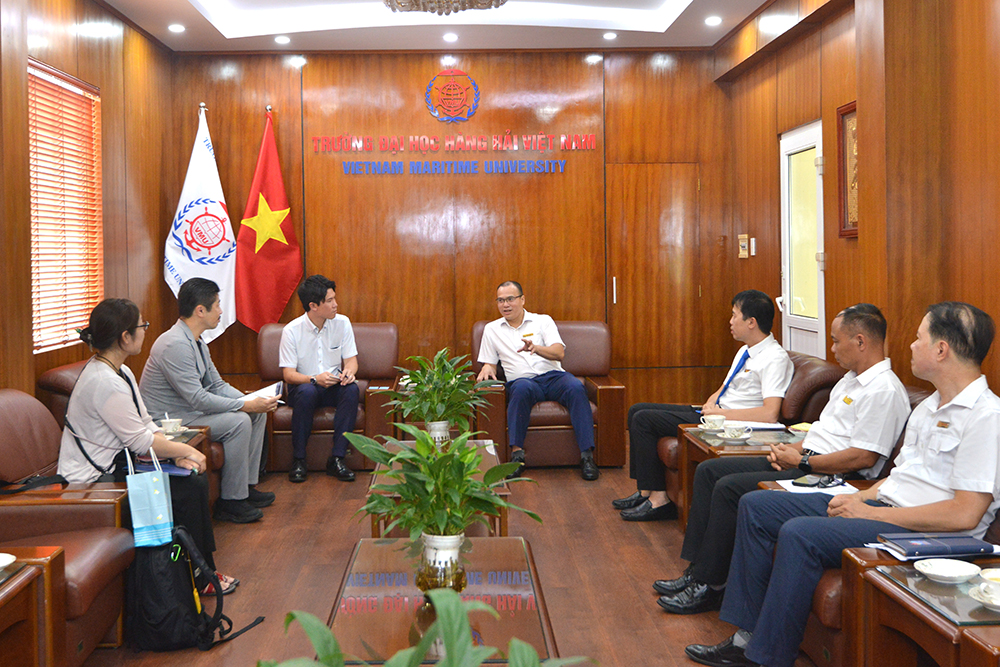
Overview of the working session
The meeting was attended by Assoc. Prof. Dr. Nguyen Minh Duc, Vice President of VMU, together with the Representatives of relevant academic and professional units.
At the meeting, Assoc. Prof. Dr. Nguyen Minh Duc gave an overview of VMU’s history, development and capabilities in educating and training high-quality maritime human resources. He particularly highlighted the University’s strengths in practical education and training, supported by modern and comprehensively equipped simulator systems.
The MLIT Delegation expressed particular interest in VMU’s maritime education and training activities using simulation technology. The Delegation members explored the University’s facilities and simulator systems, as well as its training programmes and approaches to simulator-based training. They also exchanged views on VMU’s experience in integrating theoretical education, practical training and simulator-based training to enhance learners’ professional competencies.
Exchanging experience in simulator-based maritime training
A key topic of discussion was the potential use of simulator-based training to support and replace part of the training currently conducted onboard ships. The exchange was particularly relevant given the growing emphasis on the quality, safety and effectiveness of maritime education and training.
Simulator-based training provides learners with a controlled environment in which they can practise and respond to a wide range of operational scenarios. This approach can contribute to enhancing professional skills, decision-making and safety awareness while complementing practical training onboard ships.
The discussions also took place in the context of the International Maritime Organization (IMO)’s ongoing comprehensive review of the International Convention on Standards of Training, Certification and Watchkeeping for Seafarers (STCW Convention) and the associated STCW Code. The exchange of practical experience between the two sides provided an opportunity to discuss the potential role of simulation technology in enhancing the quality and effectiveness of maritime education and training.
Notably, VMU was selected as the first destination of the MLIT Delegation in Vietnam. The visit provided an opportunity for the two sides to exchange practical experience and explore potential areas for further cooperation in maritime education and training, particularly in the application of simulation technology.
The MLIT Delegation visited VMU’S simulator systems
As part of the programme, the Delegation visited several of VMU’s key simulator systems and training facilities used for maritime education and training.
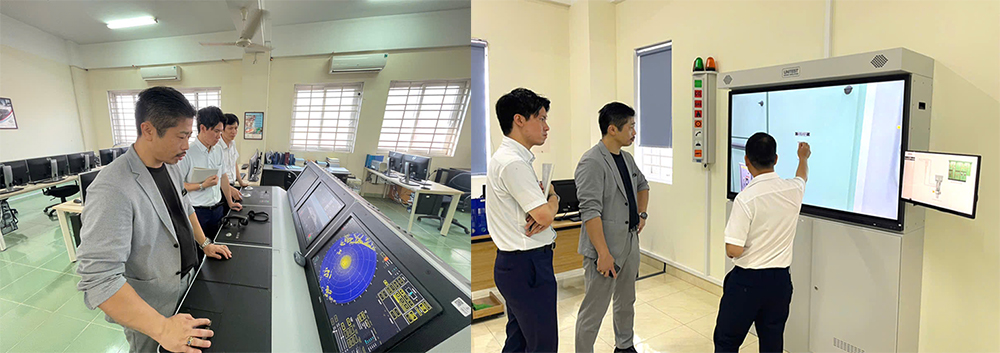
The Delegation visited VMU’s key training facilities and simulator systems
During the visit, the Representatives of VMU’s relevant professional units introduced the functions and applications of the simulator systems and shared their experience in using simulation technology for training purposes. The Delegation also observed the organisation of practical training sessions and discussed approaches to effectively utilising simulators in maritime education and training.
The working session provided an opportunity for VMU and the MLIT Delegation to exchange practical experience and explore potential cooperation in education, training, research and the application of simulation technology in the maritime sector.
The interest shown by MLIT and Japanese maritime education and training organisations in VMU’s training capabilities and simulator systems further demonstrates the University’s professional expertise and experience in developing high-quality maritime human resources in line with international standards.
The visit also created a positive foundation for VMU to further promote innovation in maritime education and training, strengthen the application of advanced technologies, and expand international cooperation in developing qualified maritime professionals for the increasingly international maritime industry.